
Prioritizing Power for Longevity and Performance

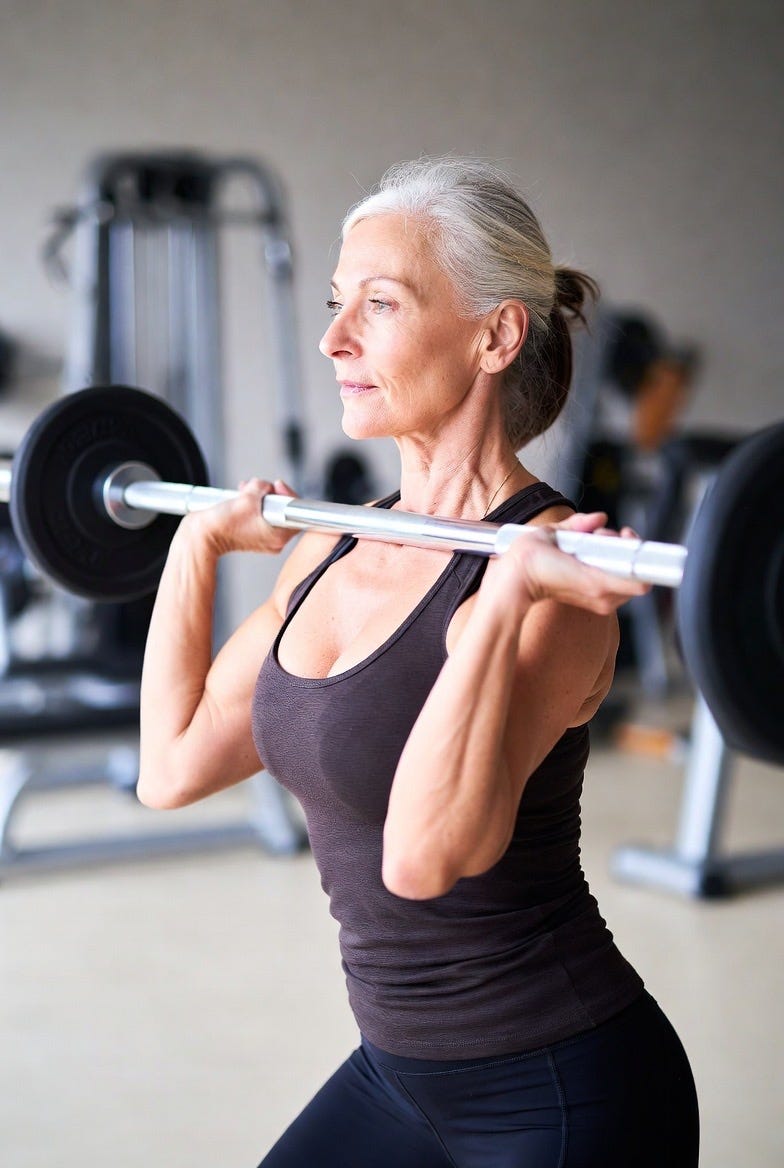
As I hit my 50s, I’ve noticed how those long trail runs or heavy rucking sessions that used to feel effortless now demand more recovery, and that quick push off a rock or smooth pivot on uneven ground isn’t quite as snappy. Whether you’re logging ultra miles, clearing slash on your property, or out for a quick hike, maintaining an active lifestyle as we age hinges on smart training. And when it comes to strength work, we need to bias toward power over pure hypertrophy. Don’t get me wrong. Building muscle mass has its place, but power training delivers the functional edge we lose fastest with time, and it brings some muscle growth along for the ride. Let’s break this down, drawing from what the science and my clinical experience tell us.
First off, we have to face the reality of what aging does to our muscles. Starting around age 30 or 40, we begin losing muscle mass and strength at a rate of about 1-2% per year, but it’s the drop in power, that ability to generate force quickly and smoothly, that’s the real thief. Studies show muscle power declines faster than strength alone, with losses accelerating after 60, sometimes by 3-5% annually without intervention. This isn’t just about feeling slower; it’s biology at work. We preferentially lose type II fast-twitch fibers, the ones responsible for rapid contractions, due to things like reduced neural drive, mitochondrial dysfunction, and hormonal shifts. In my practice, I see this play out. A 55-year-old runner who used to bound up hills now struggles with knee drive, or a 65-year-old clearing slash whose quick lifts turn into strains because that burst of power just isn’t there. If we don’t address it, sarcopenia(age related muscle loss) sets in, leading to frailty and falls. But the good news? It’s reversible with targeted training.
That’s why, for the aging athlete, we should prioritize power training over traditional hypertrophy-focused routines. Hypertrophy work, think moderate weights, 8-12 reps per set to pump up muscle size, is great for building mass, which helps by increasing muscle size and metabolic health. But as we get older, power protocols, which emphasize low reps (1-5) with controlled speed or heavier loads moved smoothly, better target those fast-twitch fibers and neural adaptations we lose first. Research comparing the two shows power training yields superior improvements in muscle power and functional tests like balance or quick movements in older adults, often with modest edges over strength-only programs. In my experience, clients in their 40s and beyond who shift to power see quicker gains in real-world resilience.
And here’s a key perk: power training often carries over to muscle growth, so you’re not sacrificing muscle size entirely. When you perform smooth, controlled lifts with progressive overload, you’re still creating mechanical tension and metabolic stress, the drivers of hypertrophy, just with a focus on safe speed. Studies on older men, for instance, found power training led to similar or even better muscle thickness increases compared to traditional resistance work, thanks to recruiting more motor units and stimulating protein synthesis. You get the power you need for function, plus enough size to support joints and metabolism, without the higher volume that can tax recovery in aging bodies.
But why is power so crucial for function as we age? Think about it. Daily life and active hobbies aren’t slow and steady; they’re dynamic. Power underpins everything from rising from a chair to catching yourself mid-stumble, or generating force for a steep incline or heavy lift. In older adults, low muscle power doubles or triples the risk of mobility impairments and falls compared to low strength alone. It’s a better predictor of independence than mass or endurance, essential for preventing frailty and maintaining quality of life. For the aging athlete, this means better performance on trails, faster recovery from efforts, and reduced injury risk. Power helps with eccentric control too, like absorbing impact on descents, which preserves joints. Without it, we tighten up, lose range, and invite overuse issues, but train it, and you gently coax your body back to vitality.
So, how do we build this in practice? Aim for 2-3 sessions weekly, 20-30 minutes each, focusing on compound movements with controlled intent. Start with bodyweight or light loads, progressing as form solidifies. To ensure your muscles receive enough stimulus for adaptation, choose weights that feel appropriately challenging—ideally, the last one or two reps in each set should bring a moderate to strong sense of fatigue, without ever sacrificing good technique. For lower body power, squats and lunges are ideal: Do 3 sets of 3-5 reps, pushing up with controlled speed from the bottom. Hip hinges are gold. Kettlebell swings or deadlift variations like Romanian deadlifts, where you hinge smoothly to drive hips forward. These target the posterior chain for that quick force in strides or lifts. Upper body? Rows and presses with velocity, like medicine ball throws if accessible. Include stability work, like farmer carries, to tie it together. Frequency matters. Consistency trumps intensity at first, and always warm up with mobility drills to avoid strains.
In my clinic, power-centric training has had great results: A 70-year-old hiker regained the ability to handle heavy loads without back tweaks, and a 45-year-old ultrarunner eliminated chronic hamstring pain, to name a few examples. As the owner of concierge physical therapy and personal training services, I specialize in tailoring these programs for active adults. Whether you’re battling muscle loss or optimizing for your next adventure, drop me a line for a consultation. Together, we can build the power that keeps you moving strong.
I’m about to turn 54…do you mean to say it gets worse?
Wait to your 80s. Its a whole other level of challenges.